
Private Label vs White Label Supplements: What's the Difference?
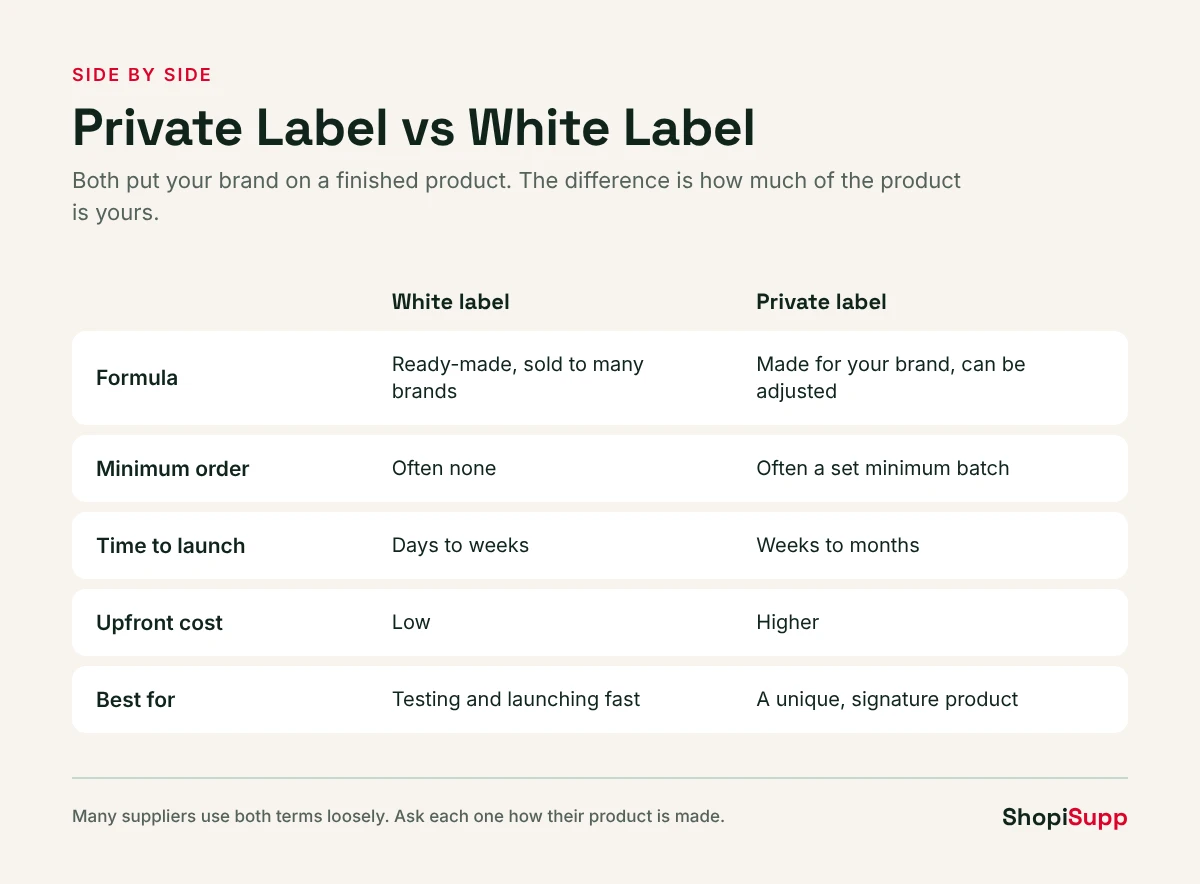
Private label and white label supplements both let you sell finished products under your own brand name. The difference is how much of the product is yours. White label products are ready-made formulas sold to many brands. Private label products are made for your brand, often with changes to the formula, flavor or packaging. Here's how they compare and how to choose.
What are white label supplements?
A white label supplement is an existing product from a manufacturer's catalog. The same formula is sold to many brands, and each brand puts its own label on it. You choose the products, your design goes on the label, and the manufacturer handles production.
White label is the fastest and lowest-risk way to launch. Many platforms offer white label products with no minimum order, shipping each product only when your customer buys.
What are private label supplements?
A private label supplement is made for your brand specifically. You might adjust the formula, choose a unique flavor, or use custom packaging. Because the product is produced for you, manufacturers usually ask for a minimum batch and more lead time.
In everyday use, many suppliers use "private label" and "white label" interchangeably. Always ask a supplier exactly how their products are made and whether the formula is shared with other brands.
Key differences
Formula: white label is ready-made and shared; private label is made for you and can be adjusted.
Minimum order: white label often has none; private label usually has a minimum batch.
Time to launch: white label takes days to weeks; private label can take weeks to months.
Upfront cost: white label is low; private label is higher because of batch minimums and development.
Uniqueness: private label gives you a signature product competitors can't copy exactly.
Which model fits you?
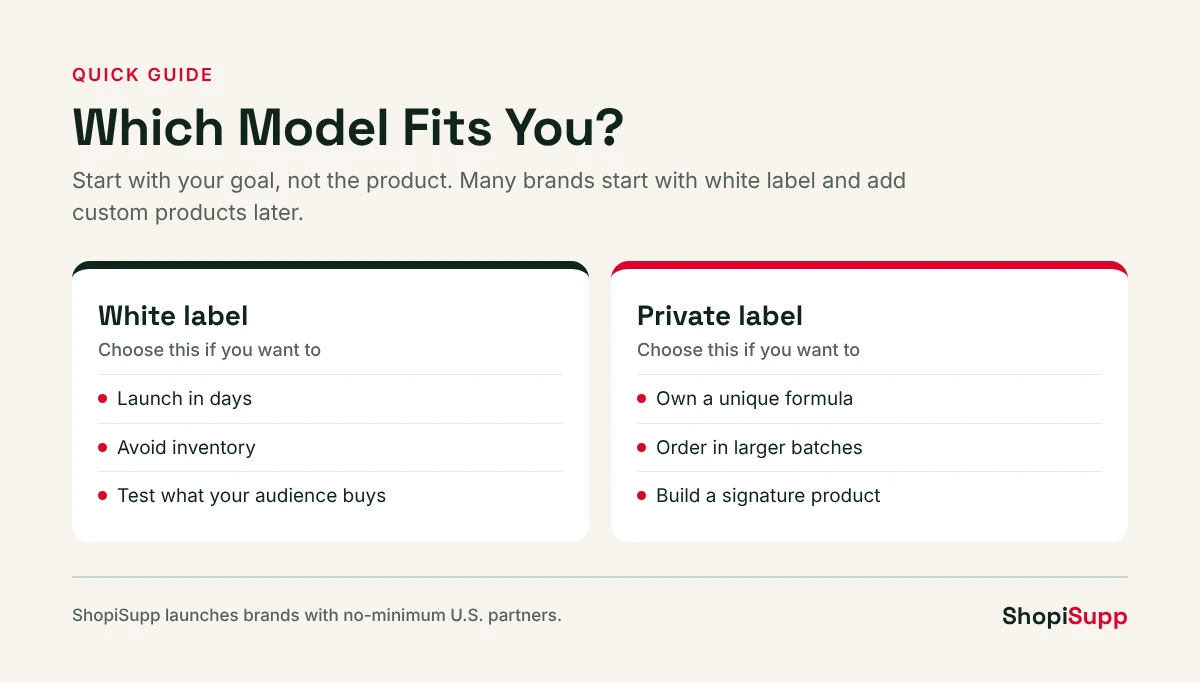
Start with your goal. If you want to launch quickly, avoid inventory and learn what your audience buys, white label is the practical choice. If you already have proven demand and want a unique formula, private label makes sense.
Many brands do both: they launch with white label products, find their best-sellers, then develop a custom private label version later.
What stays the same either way
Your brand is responsible for accurate labels and truthful marketing.
Products must come from manufacturers that follow current Good Manufacturing Practices (cGMP).
You can't make disease claims, such as saying a product treats or prevents a condition.
How ShopiSupp fits in
ShopiSupp launches brands with no-minimum U.S. partners, so you can start without inventory. We design your brand and labels, build your Shopify store and connect fulfillment. Read more about private label supplements with no minimum order, or see the full process in How to Start a Supplement Brand in 2026.
Frequently asked questions
Is white label the same as private label?
Not exactly. White label is a shared, ready-made formula. Private label is made for one brand. Many suppliers use the terms loosely, so ask how their products are made.
Which is cheaper to start?
White label, especially with no-minimum partners, because you don't pay for a batch or formula development upfront.
Can I switch from white label to private label later?
Yes. Many brands start with white label to test demand, then create a custom version of their best-seller.
Want it done for you?
ShopiSupp builds your supplement brand on Shopify in 7 days: labels, store and U.S. fulfillment connected. See your brand first. Pay $397 only if you love it.
This article is general information, not legal advice. ShopiSupp makes no health claims about any product and does not promise any level of sales or income.
